
Today I’m discussing three types of plotting techniques: 1) plotters, 2) “pantsters,” and 3) character development. Plotters work from a detailed outline they’ve written before they write a single word of their novel, book, novella, or short story. Some of us are “pantsters,” those who write by the seat of their pants. Character development relies heavily upon the characters to determine what the problems will be and what needs to occur to arrive at a solution.
I started my career more as a “pantster” but once I started writing books, especially mysteries, I’m now somewhere in between plotting and panstering now. I find mysteries almost require a rough outline to keep me on track with clues, red herrings, characters, and all the rest.
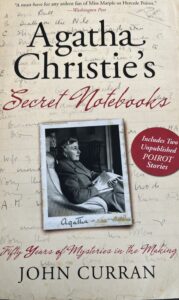
As a writer of mysteries, I’ve read many of Agatha Christie’s mysteries, and I’ve read several books related to her writing process. My favorite resource is Agatha Christie’s Secret Notebooks by John Curran (pictured above). After the death of Christie’s daughter, access was granted to seventy-three volumes of notes, lists, and drafts Christie made for herself. It is a window into her method of plotting, as well as other references to her personal writing craft.
Christie would list a few notes about a scene and mark each scene with a letter, such as A, B, C, D, etc. Then she would mix them to make the scenes more interesting, such as D, A, C, B. This technique made for interesting writing, but it also allowed her to think through her story arc and plot, making changes easy.
Some people use notecards or digital resources, such as a page per scene, and then weave together their plot as they believe best tells the story.
I’ve tried to incorporate this plotting technique into my own writing by listing important points and scenes, then shuffling them to keep readers interested.
J. K. Rowling is a writer who takes the time to plan her entire story before setting down to write. She plotted out all seven Harry Potter books before she ever wrote the first sentence of the first book.
Simple plots may be easier to write as a pantster. This may keep the story fresh and unfolding with excitement.
Other writers start with character development, taking notes about the main characters before deciding what the plot and story arc will be.
Whatever you are, is right for you. I find it interesting to share how famous writers plot or plotted in their lifetime. The important thing is to keep writing and keep learning your craft.
Leave a Reply